Restoration
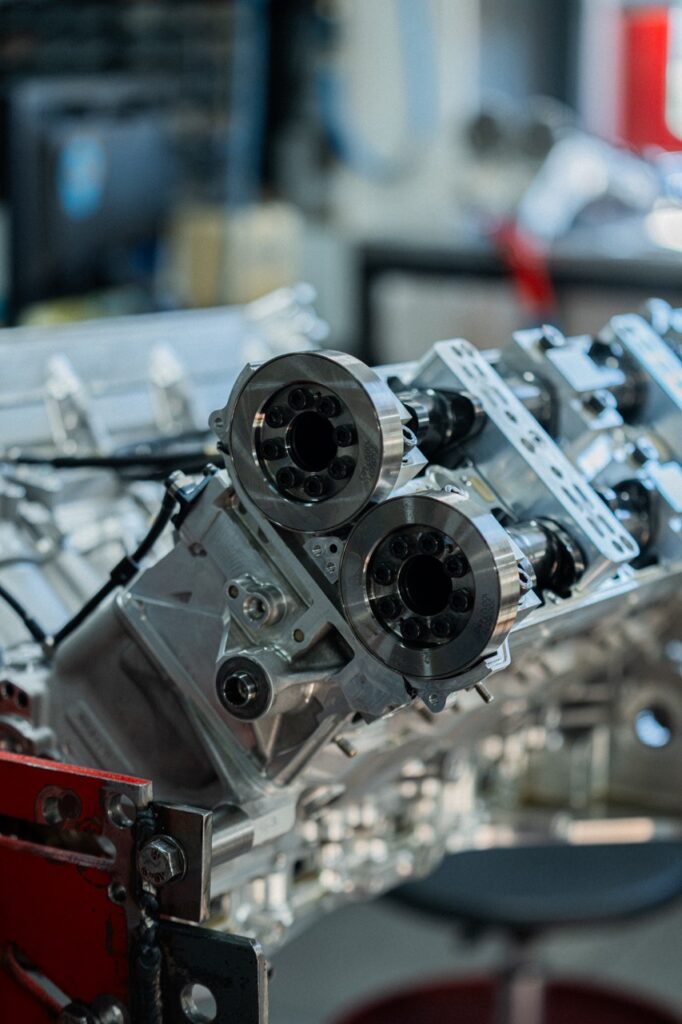
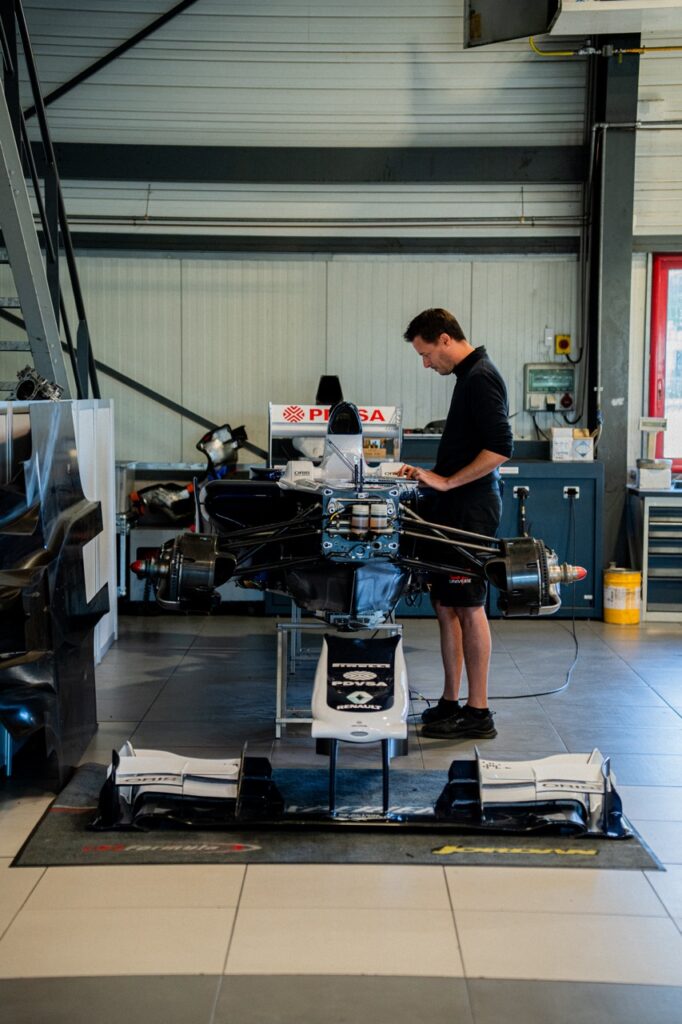
In our workshop, every historic Formula 1 car begins with a meticulous strip-down. This is followed by an in-depth inspection phase, during which every part is examined to identify what can be kept, restored or replaced.
Our expertise
Every car is treated as a piece of history, with rigour and passion.
In our workshop, every historic Formula 1 car begins with a meticulous strip-down. This is followed by an in-depth inspection phase, during which every part is examined to identify what can be kept, restored or replaced.
Restoration then follows with one essential aim: to preserve the authenticity of each single-seater. Every intervention is documented and checked, so as to respect its history, design and original identity as faithfully as possible.
Materials and components are carefully selected to stay as close as possible to the original specifications. The tools we use are precise and suited to the task, allowing each part to be worked on with the utmost care, without compromising its integrity.
From strip-down to reassembly, every stage is verified, checked and documented. The aim is not simply to repair a car, but to restore it to its original condition and spirit, while preserving the traces of its history.
The final inspection
Once the restoration is complete, each single-seater undergoes a series of technical checks and safety inspections. Every component is inspected to ensure it works properly and that the car as a whole is compliant.
The car is then cleaned and inspected one last time before being presented. Its history, racing record and the work carried out are documented, bearing witness to the quality of the work and the respect shown for its heritage.
By bringing each single-seater back to life, we preserve a piece of history so that it can live on and continue to stir emotions on track. That is our commitment.
Our team
Jean Christophe Mignon
Lead Restoration Mechanic
Nathan André
Restoration Mechanic
Jérémy Julini
F1 Mechanic, Driving Experiences
Stay tuned for more interviews with the rest of the team…
Catalogue of F1 cars restored by LRS:
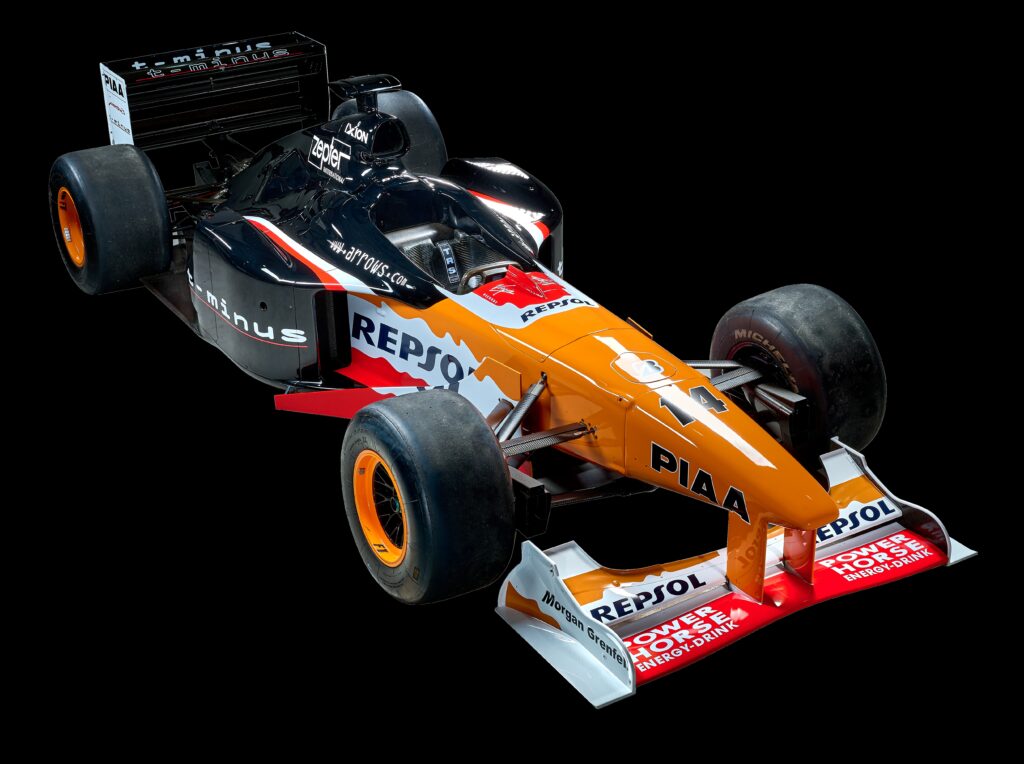
ARROWS A20
1999 · Chassis no. 7 · Repsol Arrows
An Arrows from the heart of the V10 golden age.
The Arrows A20 perfectly embodies late-1990s Formula 1: a spectacular single-seater powered by a 3.0-litre Arrows A20E V10, derived from the Hart engine and producing around 715 hp. Entered by the Repsol Arrows F1 Team in 1999, it was driven by Pedro de la Rosa and Toranosuke Takagi.
Chassis no. 7 is associated with Pedro de la Rosa, who made his Formula 1 debut that season. In his very first Grand Prix, in Australia, the Spaniard finished sixth and scored a point for Arrows. This car therefore carries the memory of the first F1 steps of a driver who would go on to become a major figure in Spanish motorsport.
Engine: Arrows A20E / Hart V10 3.0 L
Driver: Pedro de la Rosa
Chassis: A20 no. 7
Year: 1999
BMW SAUBER F1.09
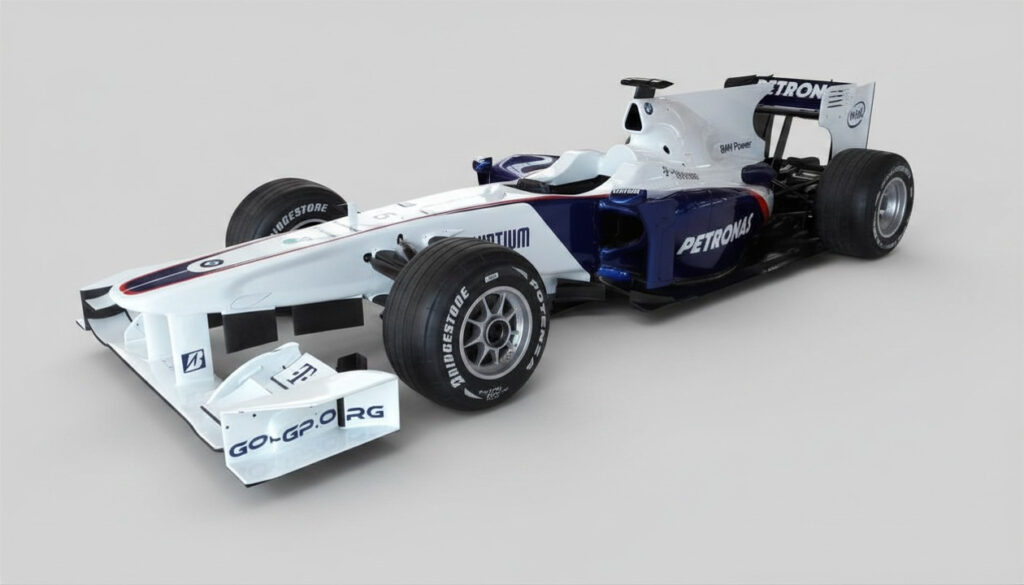
2009 · Chassis no. 3 · BMW Sauber F1 Team · The last BMW in Formula 1.
The F1.09 holds a special place in BMW’s Formula 1 history. Raced in 2009, it is powered by the BMW P86/9, a naturally aspirated 2.4-litre V8, initially paired with the KERS system.
It competed in a season marked by a sweeping aerodynamic revolution and the return of slick tyres. Chassis no. 3 is associated with Robert Kubica, who shared the season with Nick Heidfeld.
Above all, this car belongs to the final chapter of BMW’s involvement as a Formula 1 constructor, with the marque announcing its withdrawal at the end of the 2009 season. It is a car that bears witness to a pivotal moment in the sport’s recent history.
Engine: BMW P86/9 V8 2.4 L
Driver: Robert Kubica
Chassis: F1.09 no. 3
Year: 2009
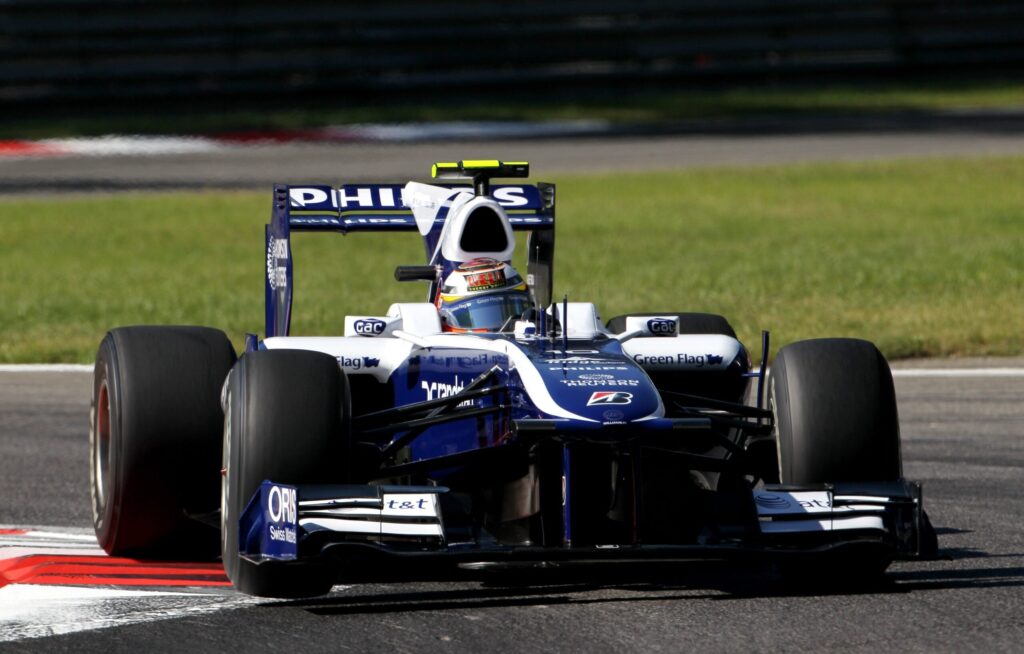
WILLIAMS FW32
2010 · Chassis no. 3 · AT&T Williams
A Williams from the heart of the last naturally aspirated V8 era.
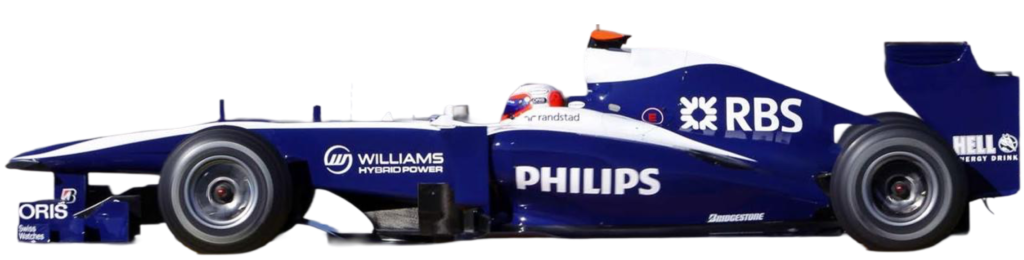
The Williams FW32 marked Cosworth’s return as engine supplier to the British team after several seasons with Toyota. Designed to the 2010 regulations, it is built around the Cosworth CA2010, a naturally aspirated 2.4-litre V8, paired with a seven-speed semi-automatic gearbox.
Chassis no. 3 is notably associated with Nico Hülkenberg, who drove it from the start of the 2010 season. This FW32 belongs to a pivotal period in Formula 1, when naturally aspirated V8s reached technological maturity before the arrival of a new generation of power units.
With its Cosworth engine, carbon-fibre construction and history linked to Hülkenberg’s F1 debut, this chassis bears witness to an era of the sport that has now disappeared.
Engine: Cosworth CA2010 V8 2.4 L
Driver associated with the chassis: Nico Hülkenberg
Chassis: FW32 no. 3
Year: 2010
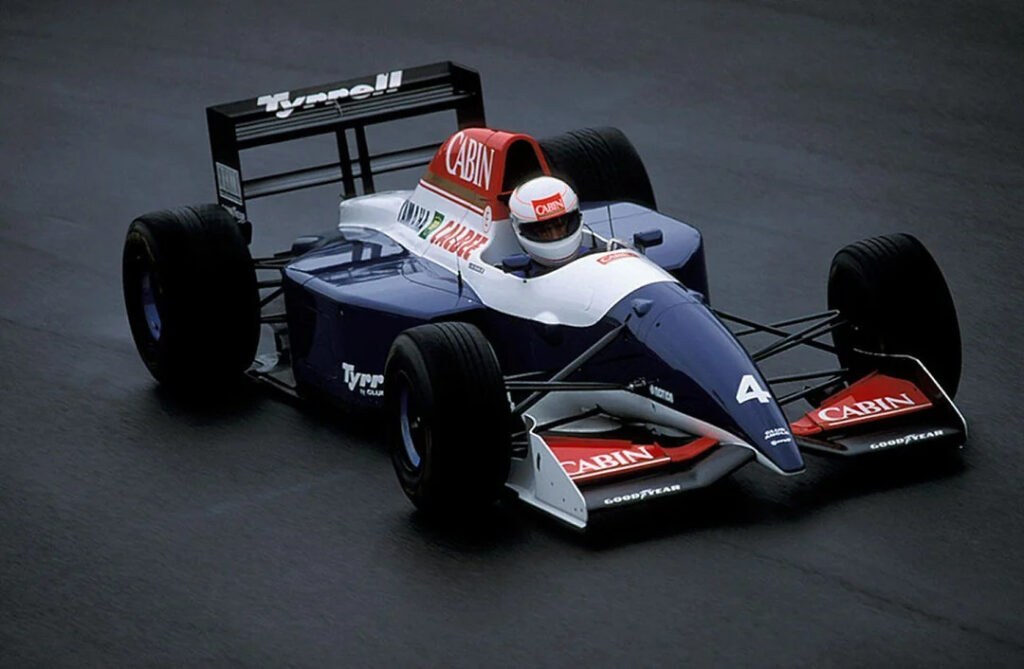
TYRRELL 021
1993 · Chassis no. 3 · Tyrrell Racing
The hallmark of a legendary team.
The Tyrrell 021 appeared in the second half of the 1993 season, as the British team continued its adventure against the sport’s major manufacturers. It is powered by the Yamaha OX10A V10, an engine based on the Judd GV architecture, and stands out in particular for its shorter wheelbase.
On its debut at the British Grand Prix, Andrea de Cesaris took the wheel of the only 021 available, while Ukyo Katayama carried on with the 020C. Chassis no. 3 thus belongs to a distinctive period in the history of Tyrrell, one of the most iconic teams of Formula 1’s early decades.
Engine: Yamaha OX10A V10
Driver: Andrea de Cesaris
Chassis: 021 no. 3
Year: 1993
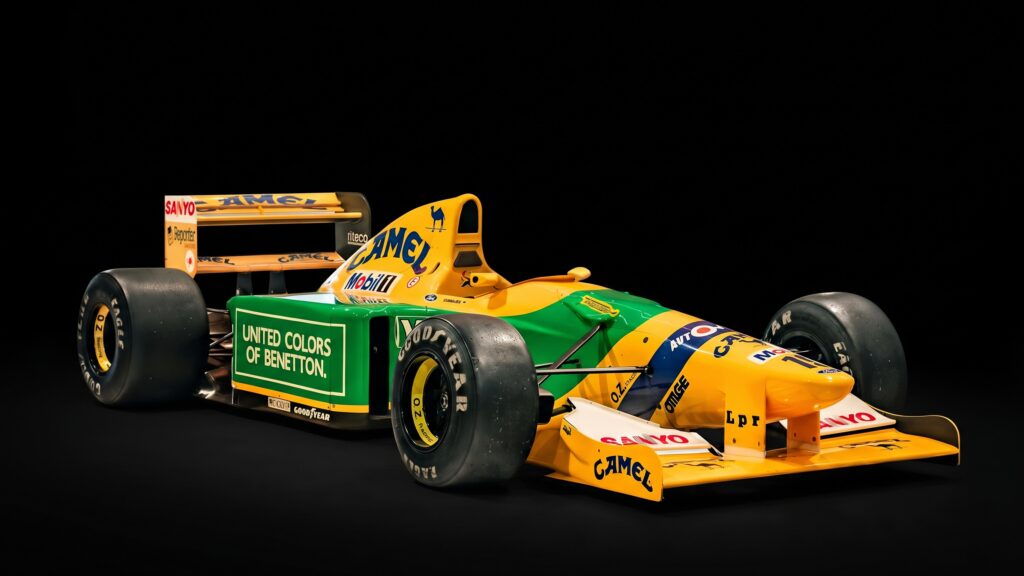
BENETTON B192
1992 · Chassis no. 7 · Benetton Formula
A decisive step towards Benetton’s great years.
The Benetton B192 is one of the single-seaters that heralded the team’s rise in the early 1990s. Designed under the direction of Ross Brawn and Rory Byrne, it built on the foundations of the B191 while bringing a significant evolution of its aerodynamics.
Under its bodywork sits a 3.5-litre Ford-Cosworth HB V8, producing up to around 680 horsepower. Paired with a six-speed gearbox, this engine contributes to the very distinctive character of this generation of Formula 1 cars.
The B192 also marks an important milestone in Benetton’s history: it allowed the team to establish itself firmly among the front-running outfits and laid the technical foundations for the brand’s successes in the years that followed. For Benetton, the 1992 season ended notably with victory at the Belgian Grand Prix and third place in the Constructors’ Championship.
Engine: Ford-Cosworth HB V8 · 3.5 L
Chassis: B192 no. 7
Year: 1992
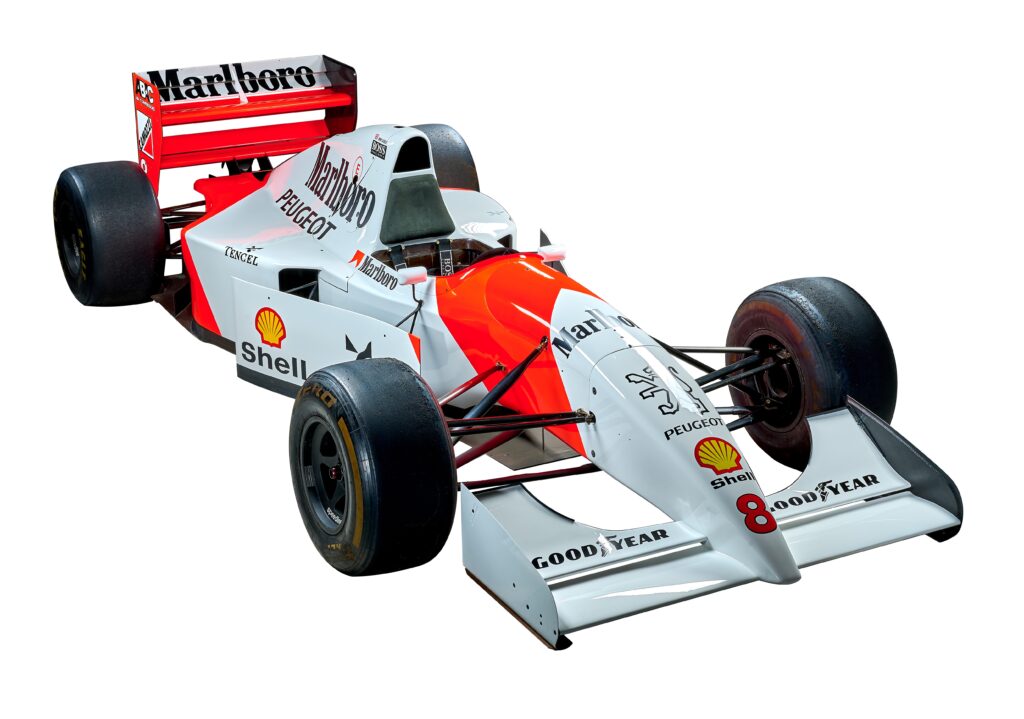
McLAREN MP4/9
1994 · Chassis no. 5 · Marlboro McLaren Peugeot
A McLaren at the heart of a changing era.
The MP4/9 marks a turning point in McLaren’s history. After Ayrton Senna’s departure, the British team embarked on a new adventure with Peugeot Sport and its A4/A6 V10, a first partnership that saw McLaren through the 1994 season.
The car was driven mainly by Mika Häkkinen and Martin Brundle. Chassis no. 5 is associated with Brundle, a seasoned British driver who brought his experience to a team in the midst of rebuilding.
Despite a season hampered by reliability problems with the Peugeot engine, the MP4/9 remains a particularly fascinating car: it captures the moment McLaren turned a new page in its history, before the arrival of Mercedes-Benz.
Engine: Peugeot Sport A4/A6 V10 3.5 L
Driver: Martin Brundle
Chassis: MP4/9 no. 5
Year: 1994
JORDAN J196
1996 · Chassis no. 5 · Jordan Grand Prix
The Jordan spirit in its most recognisable form.
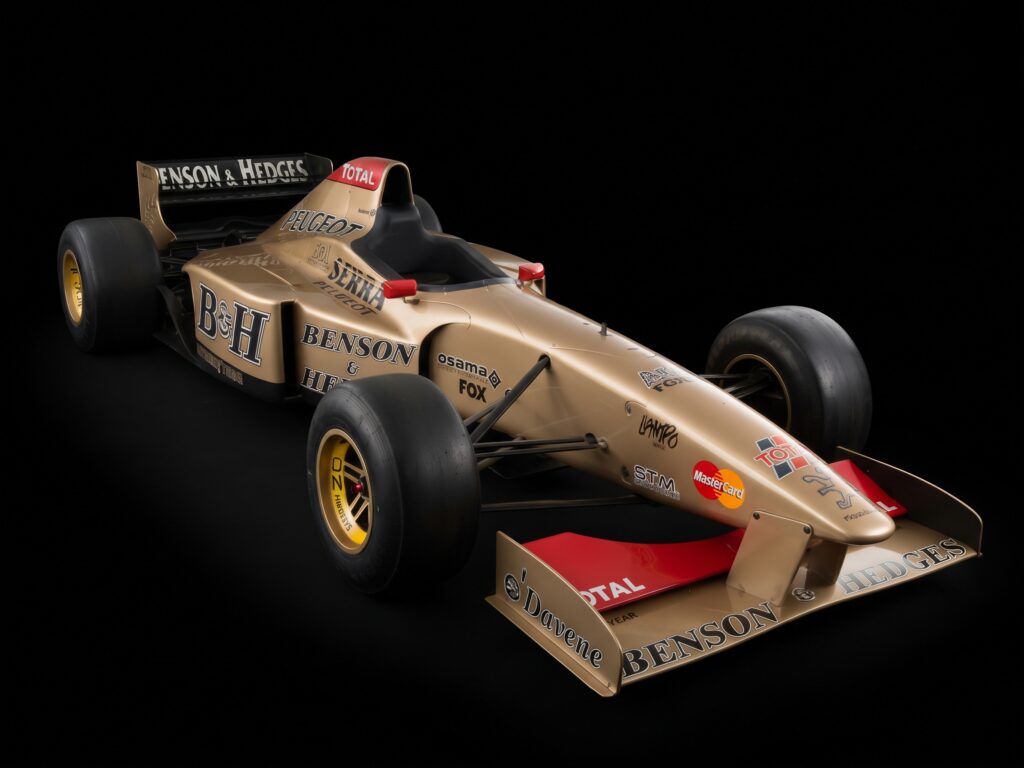
The Jordan 196 belongs to one of the most iconic periods of the team founded by Eddie Jordan. For the 1996 season, the single-seater was powered by a Peugeot A10 V10, while its spectacular gold Benson & Hedges livery became instantly recognisable on circuits around the world.
The team’s drivers were Rubens Barrichello and Martin Brundle. Chassis no. 5 is associated with Rubens Barrichello, then a young Brazilian driver on the rise.
With its V10, this Jordan J196 perfectly embodies the era when independent teams could still stamp their own personality on Formula 1.
Engine: Peugeot A10 V10 3.0 L
Driver: Rubens Barrichello
Chassis: 196 no. 5
Year: 1996